Is the port where the duct hose enters the tent the sole source of outside air? If so, you might remove the exhaust fan and leave its port open. The humidifier fan will then pull air in and push it out the upper port.
I don’t see an air source for the humidifier. Where is it getting the air it’s blowing into the tent?
The 180° bend in the hose shown in your photo is suboptimal. Do you see a nice flow of mist coming out of the port? Is water collecting in the lower section of hose?
Why not put the larger humidifier inside the tent? It would be simpler and more efficient.
@Venturi i originally tried having the humidifier in the tent, but even with the duct fans at their lowest speed it was still not increasing humidity. So I wanted to experiment with replacing the intake fan with the humidifier. Either option is not really making a difference in humidity.
I got a second humidifier now, so I’ll try a few options and see if anything works. I think the humidifiers are just cheap and not very effective
Have you tried removing the exhaust fan and leaving its port open?
If that’s not good enough, how about trying that, plus putting the humidifiers in the tent with the inlet port open? That would give you passive airflow, where warm air rises and exits through the upper port while cooler air is drawn in through the bottom port.
If even that doesn’t do the trick, you’re probably right that your humidifiers simply don’t produce enough mist. I use an AC Infinity T3, which has a max output of 240 ml/hour. Spiderfarmer and Mars Hyrdro make units with max outputs of 450 and 580 ml/h, respectively.
@Venturi if the exhaust fan is off then the humidity can get to optimal levels. I was just worried that I wouldn’t have enough airflow without the exhaust fan because a lot of people say it’s necessary. I’m new to this so I wouldn’t know.
If removing the exhaust fan and leaving the port open is not going to harm the airflow then I geuss that might be my solution.
Get and inkbird controller for your humidifier and set it to control your humidity levels, they are a must have and not expensive. Also try turning off your inline, but keep your exhaust running at 50% . Your exhaust will pull air through the bottom port as a passive air intake but will help retain a little more humidity
I have a section of flexible duct with a screen at tge end with a downward bend in it to prevent light intrusion and that is my air intake . I’ve never run an inline fan, just a passive intake. Never have any issues at all
Removing the exhaust fan will reduce the airflow through the tent (obviously) but, if the bottom and upper ports are open, the heat from the light will ensure you get enough airflow to meet the plants’ CO2 and oxygen needs. The warm air will rise and exit through the upper port, drawing cooler air in through the lower port.
Exhaust fans are used most often when the lights drive the tent temp too high and the temp in the room is acceptable. An alternative is to run an intake hose from a nearby window to a lower port, if the outdoor temp is better. They’re used to solve other environmental problems, too, but heat removal is the most common.
If I was only going to run one fan, would it be better to have just the intake fan or just the exhaust? @IslandGrown76 recommends using only exhaust while @Venturi recommends using only intake.
I’m assuming both options would yield similar results.
What kind of filter/how do I keep bugs out of the open ports? It seems the intake port at the bottom would have the biggest threat of bugs if it was left open.
Use flexible duct hose and secure in the opening and use a stove pipe thimble to cover the end of the duct pipe. Take and drill many 1/2" holes and cover with some screen. Run exhaust and keep the intake passive
I like this website because I can ask a lot of noob questions that might seem common sense to most, but everyone here is kind and patient with me and very helpful.
With just the exhaust running, it creates enough pressure that the passive intake sucks air in enough to feel, so that’s a total success.
I wanted to make sure the CFM of the fan will circulate the entire volume of the tent every minute , since that’s what I read is necessary. My tent has a volume of 45 feet so I found a 50CFM bathroom vent fan at home depot.
The 50cfm bathroom fan blows seemingly just as hard as my 190cfm fan, which is confusing to me. I also think it might overheat if left running 24/7. So I might go back to the regular fans and just slow them down.
I just wish I didn’t have to guess whether I’ve slowed them down too much or too little.
I just set everything up and will check if humidity is improving shorty.
Still not achieving good humidity, I’m going to return this peice of crap evap humidifier to Walmart and buy another ultrasonic one. The one ultrasonic one I have seems to be effective, but these evap humidifiers don’t seem to being doing anything
No. I recommend removing it and leaving the exhaust port open. You said before that you found that the humidity was ok when you tried that before.
It isn’t. @OGIncognito and I have tried to tell you this. He said: “I wouldn’t go too far down this rabbit hole. As long as the fan is capable of exhausting the hot air and the grow space is capable of maintaining temps below 85 you’ll be ok.”
There’s no way you’re going to get the humidity right if your exchange rate is once every minute. Even a human wouldn’t need that rate if he was zipped up inside the tent.
@Venturi sorry for my confusion. I tend to overcomplicate things and get overwhelmed; my apologies. I’ve been reading so much stuff online from different sources, I got mixed up.
Put whatever humidifier you end up with on the floor inside the tent, remove any airflow fans, open the lower inlet and upper exhaust ports, and turn the light on. Give it 30 minutes or so and then tell us the resulting temp and humidity, please.
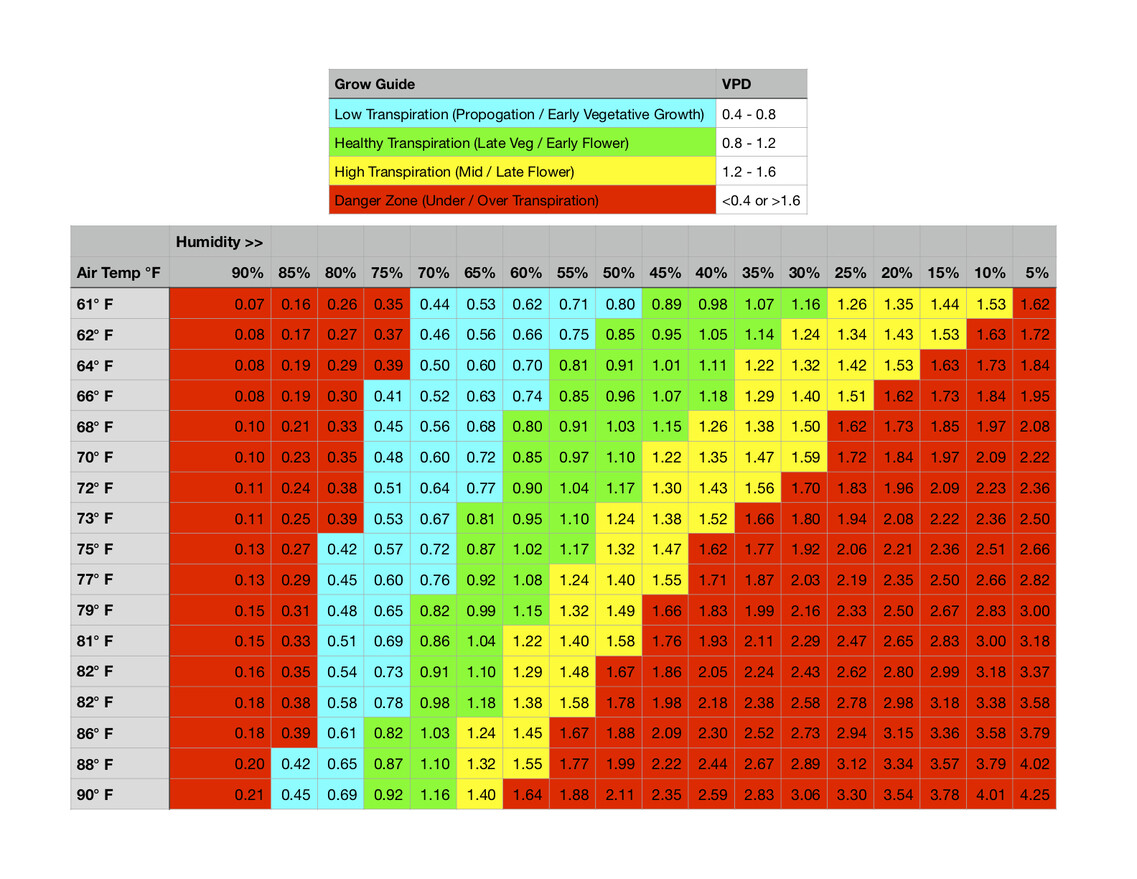
Humidity at the bottom of the tent can reach 70% but temperature is 85°F.
Towards the top of the tent where the light is positioned the humidity was 32% and temperature 93°F. It looked like all the vapor from the humidifier was stuck underneath the heat from the light.
I’m starting to think I might just need to wait until it starts getting colder outside to use this tent
Are you getting your measurements from a thermometer/hygrometer with a remote sensor? If so, hang the sensor at the height your seedlings will be. (I infer you don’t have any plants yet.)
Which light do you have? It may be desirable to lower it and turn it down to reduce the heat it produces.
Do you have a way to measure the PPFD the light produces?
@Venturi I have 2 Phlizon 100W dimmable lights and one Vivosun 100w. (Not great quality, i know, but it was within budget).
The Phlizon was what I tested yesterday, and it got so hot that I raised the tent temps 93°+ and it burned me when I touched it.
I’m trying the Vivosun one now which runs much less hot. I think it has a cooling fan because it makes a humming sound (I hope it’s the fan and not something damaged).
The floor is at 79° and the top near the light is at 87.5°.
It is less hot outside right now then it was when I tested yesterday, so the lower temperatures in the tent could just be due to outside conditions. I’ll wait til the hottest part of the day and check again.
Even if I can get a good temp/humidity with one light, I will need to use the other lights later when the plant gets bigger, which would create more heat.
Without fans running I can get humidity where it needs to be, so my problem now is just temperature.
I tried using photone app on android to measure light intensity but idk if it’s accurate or not.
Are the Phlizon lights model PL-1000? Which Vivosun model? (They make several 100W units.) Did you buy them new?
I can’t vouch for Phlizon, but I own 3 Vivosuns and their quality is very good.
You probably have room for all 3 lights in your 3’ x 3’ tent. I think you should hang all 3 so we can get your temp & humidity right for that case since we know you’ll need it eventually.
Photone updated their app for Android a month or two ago, so be sure you have the latest version. It’s more accurate than the preceding version. Be sure to put the paper strip on your phone, using the right weight of paper, per their instructions. We’ll need PPFD measurements soon.
Are you getting your temp & humidity readings from an instrument that has a probe you can hang in the tent?
BTW, it took me awhile to get temp, humidity, and PPFD right in my tent, too.
With one of them sitting on the floor and one mounted to the wall about a foot below the ceiling. I have a thermometer with a probe, but it doesn’t read humidity, and i haven’t used it yet.
I’ve relocated the drivers to outside the tent to try to reduce heat. I have one Vivosun and one Phlizon hanging now. The Phlizon one just gets so much hotter than the Vivosun.
The lights are hanging high, probably a foot from the ceiling; I know they need to hang lower but they produce so much heat. The temp the the top is 93° and 85° at the bottom with both lights running, which is the same as with one light, BUT its 15° cooler outside now than it was yesterday when i tested one light.
My humidifiers can supply as much humidity as I need if I don’t run any fans, so heat is my only problem now.
Is it normal for the Vivosun driver to make a slight buzzing sound while it is running?